Quick Answer: Handmade leather wallets cost more because they rely on highly skilled human labor rather than automated factory machines. The price reflects hours of meticulous work, including hand-cutting, punching individual stitch holes, performing the highly durable saddle stitch, hand-burnishing the raw edges with beeswax, and exclusively sourcing expensive, top-tier full-grain leather.
Breaking Down the Cost of Craftsmanship
When a consumer compares a $30 department store wallet to a $120 handmade wallet from an independent artisan, the immediate question is, "Why the massive price difference?"
In 2026, the retail market is dominated by mass-production efficiencies. Factories pump out thousands of units a day to drive the price down to the absolute bottom. However, achieving that low price requires severe compromises in material and structural integrity. A handmade wallet is expensive precisely because the artisan refuses to make those compromises.
Here is exactly where your money goes when you invest in a handmade leather wallet.
1. Premium Full-Grain Leather
A factory wallet is usually made from "genuine leather," which is essentially cheap leather scraps glued together. It costs pennies per square foot.
Handmade wallets use full-grain leather, the topmost, densest, and most durable layer of the cowhide. Tanneries charge a massive premium for full-grain leather because they cannot sand away scars or bug bites; they must use the most flawless, high-quality hides available. Full-grain leather is also significantly thicker, making it harder to work with.
2. The Labor-Intensive Saddle Stitch
A sewing machine can stitch an entire wallet in roughly 30 seconds using a flimsy lock-stitch that easily unravels.
A handmade artisan does not use a sewing machine. They must:
1. Measure and score a line along the leather edge.
2. Use a sharp awl or pricking iron to manually punch every single hole through the thick leather.
3. Take a long piece of waxed linen thread and two needles to manually weave the thread back and forth in a figure-eight pattern.
This traditional saddle stitch creates independent locking knots at every hole. It is virtually indestructible, but it takes an artisan hours to complete a single wallet. You are paying for their time and expertise.
3. Hand-Burnished Edges
Look at the edge of a cheap wallet; it is covered in a thick, rubbery paint that hides the raw leather. This takes a factory machine one second to apply, but it peels off in a few months.
A master artisan finishes the edges by burnishing. They apply natural beeswax to the raw edge and vigorously rub it with a wooden slicker. The intense friction generates heat, melting the wax into the leather fibers until they fuse into a smooth, glossy, hard seal. This process alone takes immense patience and physical effort, adding significant time and cost to the final product.
The Cost Per Year Argument
While a handmade wallet costs more upfront, it is mathematically cheaper in the long run. A $30 machine-made wallet will tear and peel within two years. A $120 hand-stitched, full-grain wallet will last 20 to 50 years.
Top Handmade Investments

Slim Handmade Leather Wallet for Men
Shop NowExperience the incredible value of true artisan labor. This wallet embodies all the hallmarks of a handmade piece—full-grain hide, saddle stitching, and burnished edges—at an accessible price.
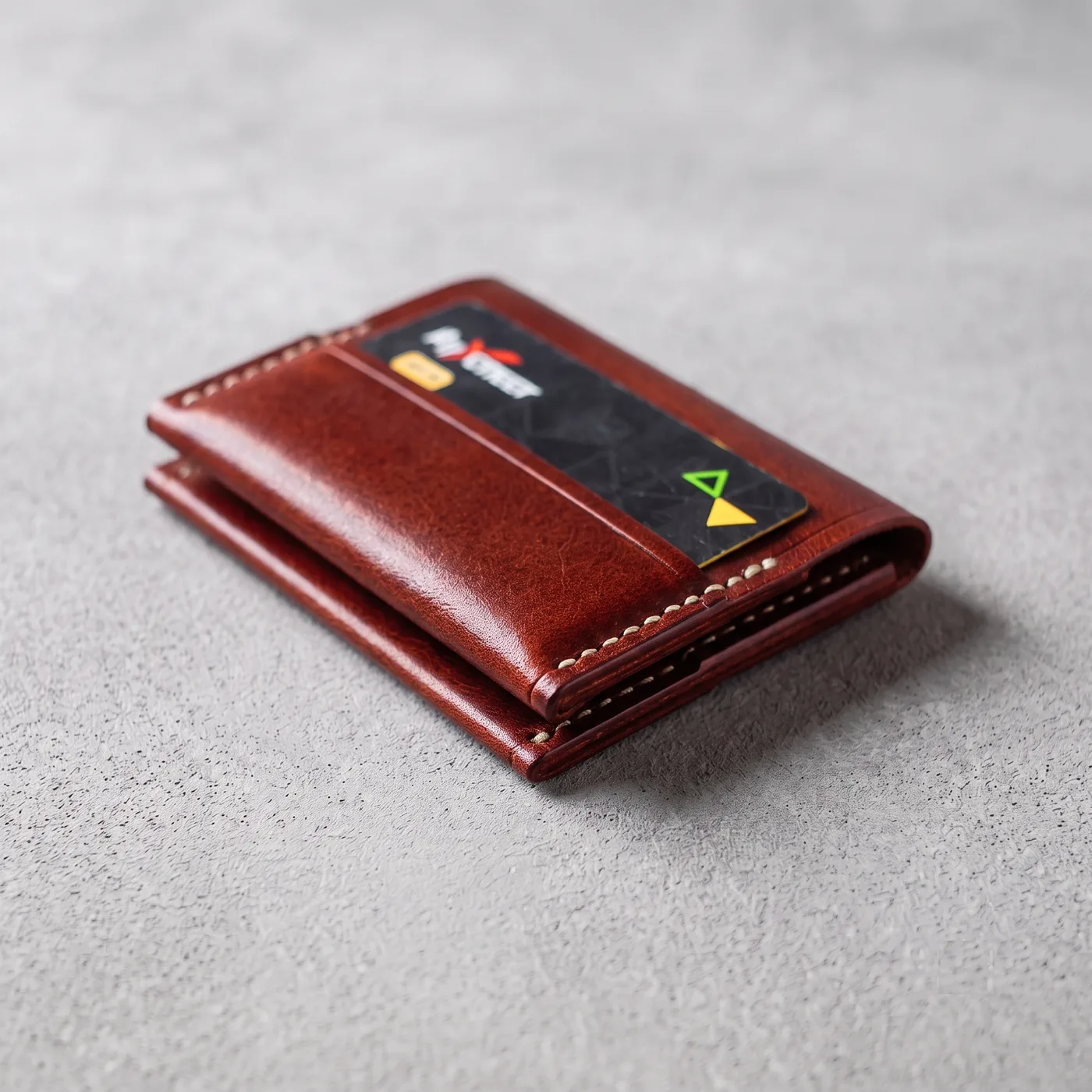
Custom Leather Wallet for Men
Shop NowThe ultimate investment. Our artisans dedicate hours to crafting this piece specifically to your custom specifications.
FAQ
Do handmade wallets ever go on sale?
It is rare for genuine handmade wallets to go on deep discount sales. Because the price is directly tied to the cost of premium materials and the fixed hours of human labor, artisans do not have the massive profit margins of mass-produced brands that allow for 50% off sales.
Is hand-stitched leather really stronger than machine-stitched?
Yes, drastically stronger. Machine lock-stitching relies on two threads looping around each other; if one loop breaks, the whole seam unravels. Hand-stitched saddle stitching creates a hard knot at every hole. If a thread breaks, the rest of the seam remains completely locked.