Quick Answer: Full-grain leather is the highest quality grade of leather available. It comes from the very top layer of the animal hide and includes all of the natural grain. Unlike inferior grades, it is not sanded or buffed to remove imperfections, which allows it to retain maximum strength, breathability, and the unique ability to develop a beautiful patina over time.
Understanding the Anatomy of a Hide
To understand why full-grain leather is the undisputed king of luxury goods, you have to understand how an animal hide is processed. A cowhide is incredibly thick—too thick to be used for a wallet or a handbag in its raw state. Therefore, a tannery splits the hide horizontally into different layers.
The Top Cut vs. The Bottom Cut
1. The Corium (Bottom): The lower layers consist of loose, disorganized collagen fibers. This is where cheap "genuine leather" and suede come from. It is weak and degrades quickly.
2. The Grain (Top): The uppermost layer of the skin is densely packed with tight, strong fibers designed by nature to protect the animal from fences, insect bites, and extreme weather. This is where full-grain leather lives.
The Defining Features of Full-Grain Leather
When a tannery takes that top layer and leaves it completely un-sanded and un-altered, it becomes full-grain leather.
1. Unmatched Durability
Because the dense surface fibers have not been sanded away, full-grain leather is incredibly resistant to tearing, puncturing, and peeling. A wallet made from this material can easily survive decades of daily friction in your pocket. It is the definitive "Buy It For Life" material.
2. The Development of a Patina
Full-grain leather is essentially a living material. Because its pores remain open (not sealed shut by heavy synthetic paints), it breathes. Over the months and years, it absorbs the natural oils from your hands, sunlight, and friction. This causes the leather to darken, soften, and develop a rich, glossy sheen known as a patina. A patina cannot be faked in a factory; it must be earned through use.
3. Natural Character
Because the hide is not buffed, every single piece of full-grain leather is utterly unique. You might see tiny variations in the grain, microscopic pores, or healed scratches. In 2026's era of hyper-homogenized fast fashion, these natural hallmarks are celebrated as proof of authenticity.
Full-Grain vs. Top-Grain Leather
It is easy to confuse full-grain with "top-grain" leather.
While both come from the top layer of the hide, top-grain leather is sanded down. Tanneries do this if the hide has too many scars or blemishes. Sanding makes the leather perfectly smooth and uniform, but it structurally weakens the hide. Top-grain is often stamped with a fake "pebble" pattern and painted. It will not develop a patina; it will only look older and more worn out over time. Full-grain leather, by contrast, looks *better* the older it gets.
Top Full-Grain Leather Wallet Recommendations
At Leonadem, we refuse to use anything less than full-grain leather. Here are our top pieces that showcase the beauty of this material:

Personalized Bifold Leather Wallet for Men
Shop NowFeel the dense, rich texture of uncorrected full-grain leather in a classic bifold design engineered to last a lifetime.
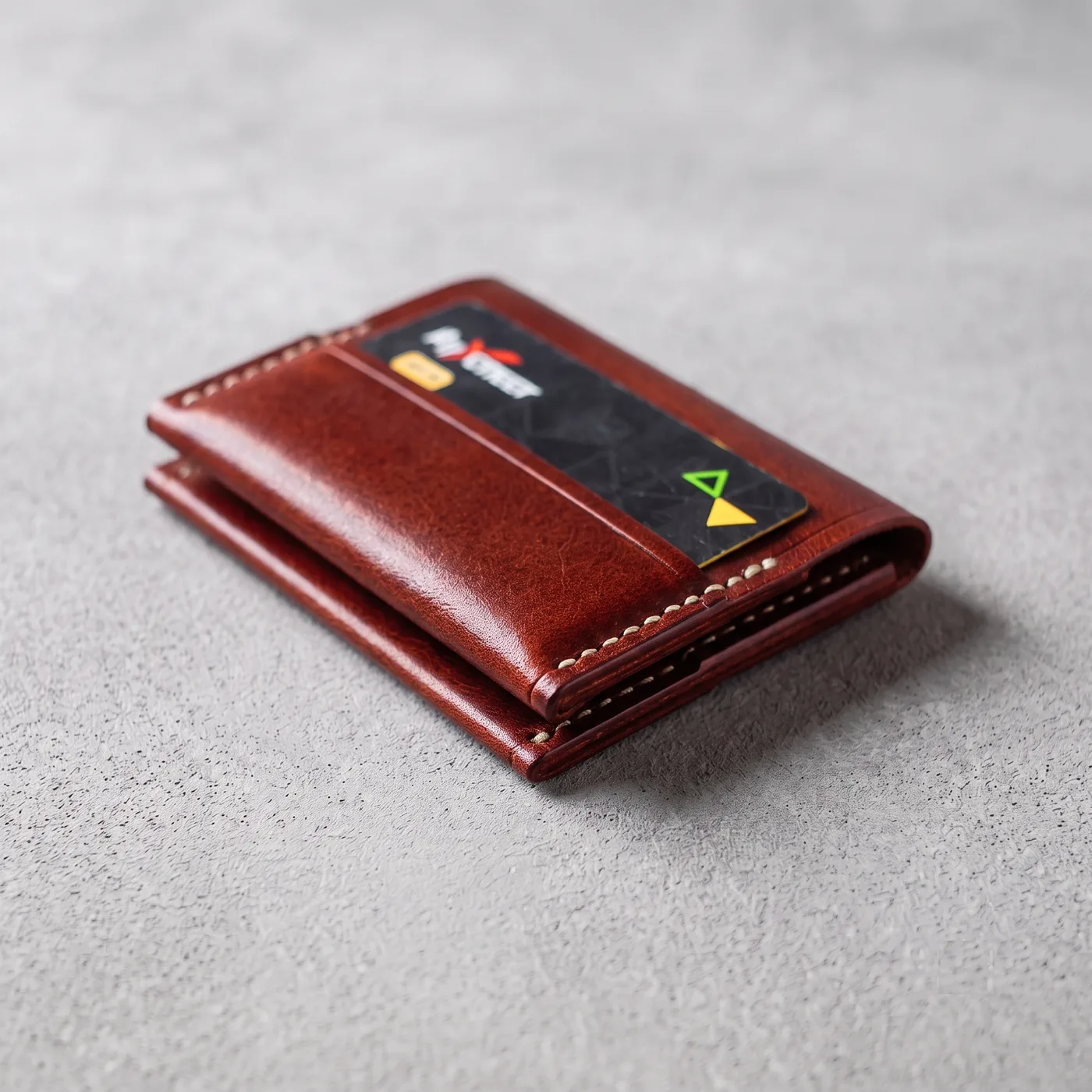
Custom Leather Wallet for Men
Shop NowBecause every piece of full-grain leather is unique, your custom wallet will have a grain pattern that exists nowhere else in the world.
FAQ
Why is full-grain leather so expensive?
Full-grain leather is expensive because only the highest quality hides (those with very few major scars or defects) can be used, as the surface is not sanded down to hide blemishes. Additionally, the dense fibers make it much harder and more time-consuming for artisans to cut and stitch by hand.
Is full-grain leather waterproof?
While not entirely waterproof, full-grain leather is highly water-resistant. The tightly packed fibers naturally repel moisture. However, if it gets completely soaked, it should be allowed to dry naturally at room temperature to avoid warping or cracking.