Quick Answer: You should expect to spend between $80 and $150 for a premium, hand-stitched, full-grain leather wallet. Spending less than $50 usually guarantees inferior "genuine leather" that will fall apart in a year. Spending over $200 often means you are paying solely for a luxury designer brand name rather than an actual increase in material or structural quality.
The Economics of Everyday Carry (EDC)
A wallet is the single most frequently handled item in your everyday carry loadout, aside from your smartphone. You sit on it, open it, stretch it, and drop it. Yet, many men hesitate to invest in a quality wallet, opting instead to buy a $30 replacement every holiday season when the old one inevitably peels apart.
To determine how much you should spend, you must look at the Cost Per Year (CPY) rather than the initial sticker price.
The $30 Department Store Wallet
- The Material: "Genuine Leather" (leather scraps glued together with polyurethane).
- The Construction: Machine-sewn lock-stitch and cheap rubber edge paint.
- The Lifespan: 1 to 2 years before it looks terribly distressed and the seams burst.
- 10-Year Cost: You will buy 5 of these in a decade. Total cost: $150.
The $100 Premium Artisan Wallet
- The Material: Full-grain, vegetable-tanned cowhide.
- The Construction: Hand-sewn saddle stitching and hand-burnished edges.
- The Lifespan: 10 to 50+ years, actively looking *better* over time as it develops a patina.
- 10-Year Cost: You will buy exactly 1. Total cost: $100.
By spending slightly more upfront, you actually save money over the decade while enjoying a vastly superior, more elegant product every single day.
What Are You Actually Paying For?
When a wallet costs $100 to $150, your money is going directly into the physical materials and the labor.
1. Full-Grain Leather: This cut of the hide is expensive because tanneries cannot hide scars by sanding it down; they must use the most pristine, unblemished hides available.
2. Skilled Labor: A machine can sew a wallet in 45 seconds. A master artisan hand-punching holes and weaving two needles through a saddle stitch takes hours. You are paying for a human being's time, expertise, and precision.
The Designer Trap (The $300+ Wallet)
If a wallet costs $300, $500, or even $1,000, are you getting a proportionally better wallet? Generally, no.
Once you pass the $150 mark, the quality of full-grain cowhide and saddle-stitching maxes out. Any additional money spent is paying for:
- A luxury fashion house logo (e.g., Gucci, Prada).
- Exotic leathers (like alligator, stingray, or shell cordovan), which are visually distinct but not necessarily more durable for EDC than heavy-duty cowhide.
Top Recommendations for the Perfect Budget
If you want the absolute maximum value for your money—where every dollar goes into quality rather than marketing hype—look at these full-grain options:
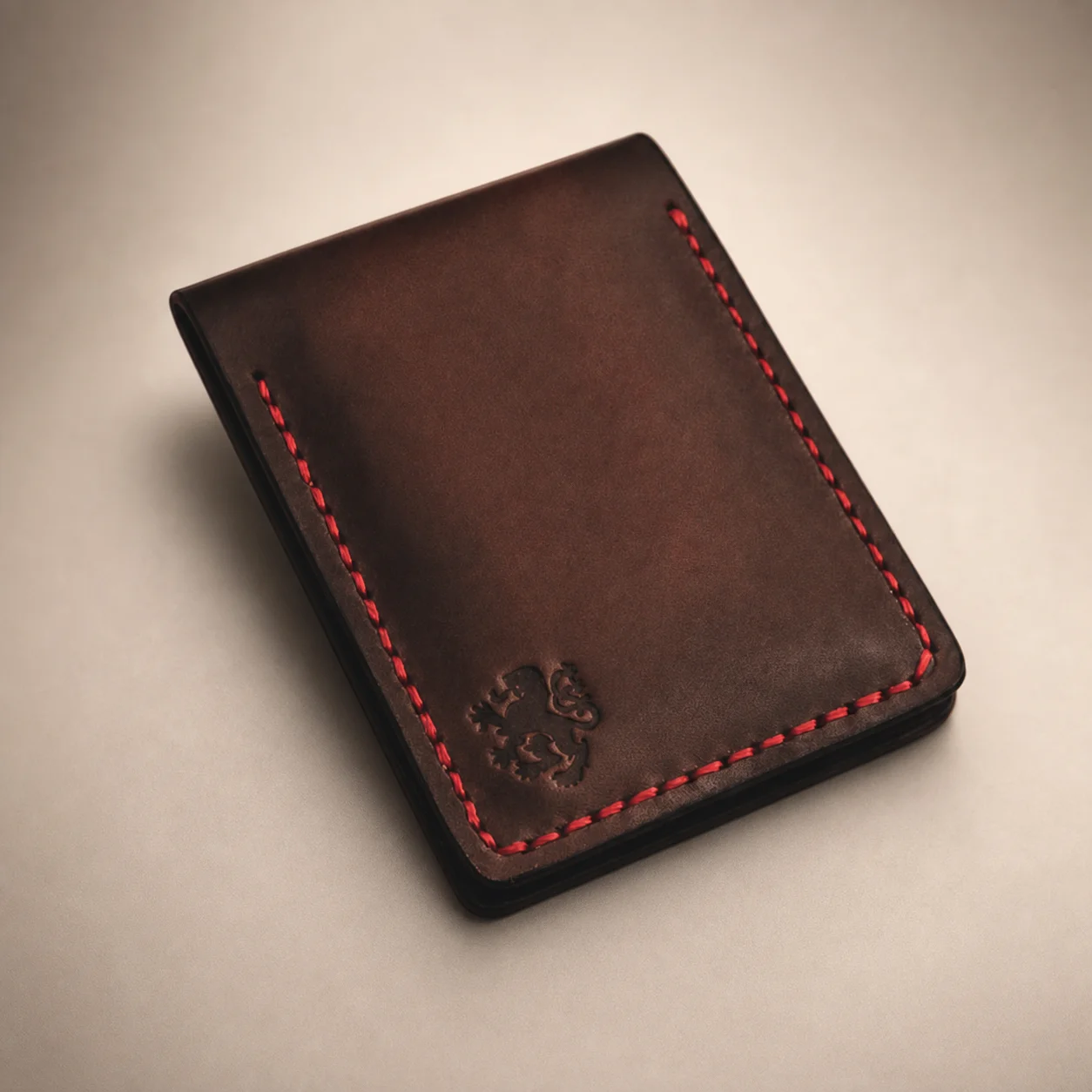
Personalized Front Pocket Leather Wallet for Men
Shop NowAt around the $110 mark, this provides bespoke personalization, saddle stitching, and full-grain leather, representing the ultimate sweet spot for value and luxury.

Slim Handmade Leather Wallet for Men
Shop NowAn accessible entry point into artisan craftsmanship, offering lifetime durability for under $100.
FAQ
Is it worth buying an expensive designer wallet?
From a purely structural and durability standpoint, no. Designer wallets frequently use machine-stitching and top-grain leathers to mass-produce items quickly. A $100 hand-stitched wallet from an independent leather artisan will almost always outlast a $500 mass-produced designer wallet.
Why does hand-stitching cost more?
Hand-stitching (the saddle stitch) requires a human to manually punch every hole with an awl and weave two needles back and forth. It is incredibly time-consuming, meaning you are paying for hours of highly skilled artisan labor, whereas a machine does the same job in seconds (but with a weaker stitch).