Quick Answer: Full-grain leather is the highest quality cut, retaining the entire natural grain for maximum durability and the ability to develop a rich patina over time. Top-grain leather is the second-highest quality, where the very top surface is sanded away to remove imperfections, resulting in a smoother but thinner and slightly less durable material that does not age as beautifully.
Understanding the Hide
When purchasing a premium leather wallet, the terminology can be deliberately confusing. Brands often use phrases like "genuine leather" or "premium leather" to obscure the actual grade of the hide. To make an informed decision, you must understand how animal hides are split.
A thick cowhide is usually split into two main layers:
1. The Top Cut: This contains the dense, tightly packed fibers exposed to the elements.
2. The Bottom Cut (Corium): This is the looser, softer underside, usually used to make suede or cheap "genuine leather."
Both Full-Grain and Top-Grain come from the valuable top cut, but they are processed very differently.
What is Full-Grain Leather?
Full-grain leather is the absolute pinnacle of leather grades. The hide is taken exactly as it is, with the entire outer grain intact.
Pros of Full-Grain
- Maximum Strength: Because the densely packed outer fibers are not sanded down, it is incredibly resistant to tearing and puncturing.
- The Patina: This is the most sought-after characteristic. Full-grain leather absorbs oils and moisture, causing it to darken, soften, and develop a beautiful "patina" that tells the story of its use over the years.
- Natural Aesthetic: You can often see slight natural imperfections like insect bites or fat wrinkles, making every single wallet unique.
Cons of Full-Grain
- Cost: It is the most expensive leather to procure and the hardest for artisans to work with because it is extremely thick.
- Break-in Period: It starts off quite stiff and requires a few weeks of daily use to soften and mold to your pocket.
What is Top-Grain Leather?
Top-grain leather is created when the very uppermost layer of the hide (the full-grain) is heavily sanded and buffed to remove all scars, bites, and imperfections. It is then usually stamped with an artificial grain pattern and heavily dyed.
Pros of Top-Grain
- Uniform Appearance: Every inch looks exactly the same, which some high-fashion brands prefer for a pristine, clinical look.
- Stain Resistance: The heavy artificial finish applied after sanding makes it highly resistant to stains and water right out of the box.
- Softer Initially: It is thinner and more pliable from day one.
Cons of Top-Grain
- Reduced Durability: Sanding away the strongest fibers means it will wear out and tear faster than full-grain.
- No Patina: Because the natural surface is removed and sealed with synthetic finishes, it will not develop a patina. It simply degrades and looks old over time.
Which Should You Choose?
If you are buying a luxury handbag that needs to look clinically perfect and resist a spilled cocktail, top-grain is a valid choice. However, for an Everyday Carry (EDC) wallet, full-grain is universally superior. A wallet undergoes constant friction in your pocket. Full-grain thrives on this friction, getting better with age, whereas top-grain will eventually peel and crack.
Top Full-Grain Leather Wallet Recommendations
At Leonadem, we exclusively use full-grain leather for our bespoke wallets.
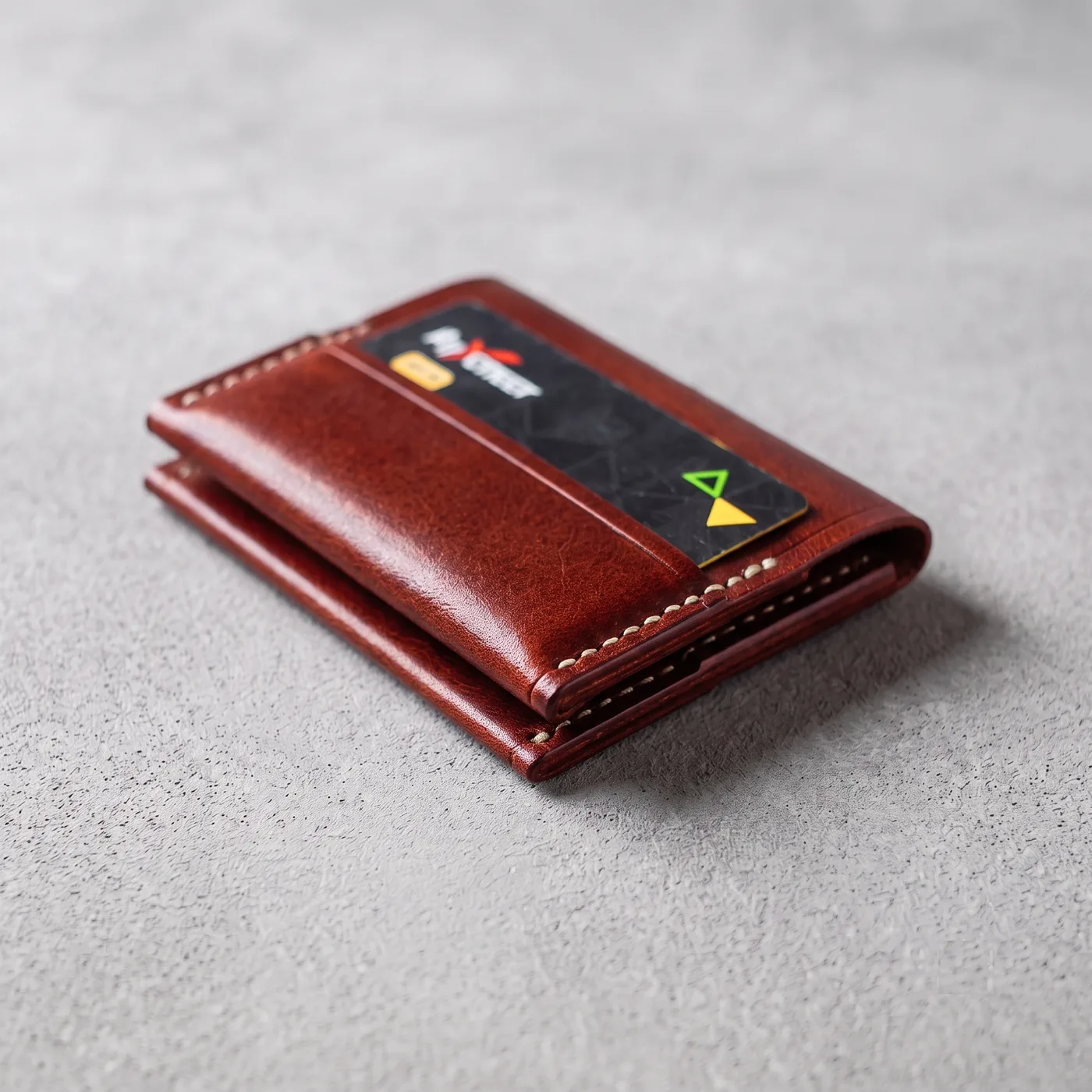
Custom Leather Wallet for Men
Shop NowExperience the unmatched durability and unique natural grain of our finest bespoke full-grain leather.
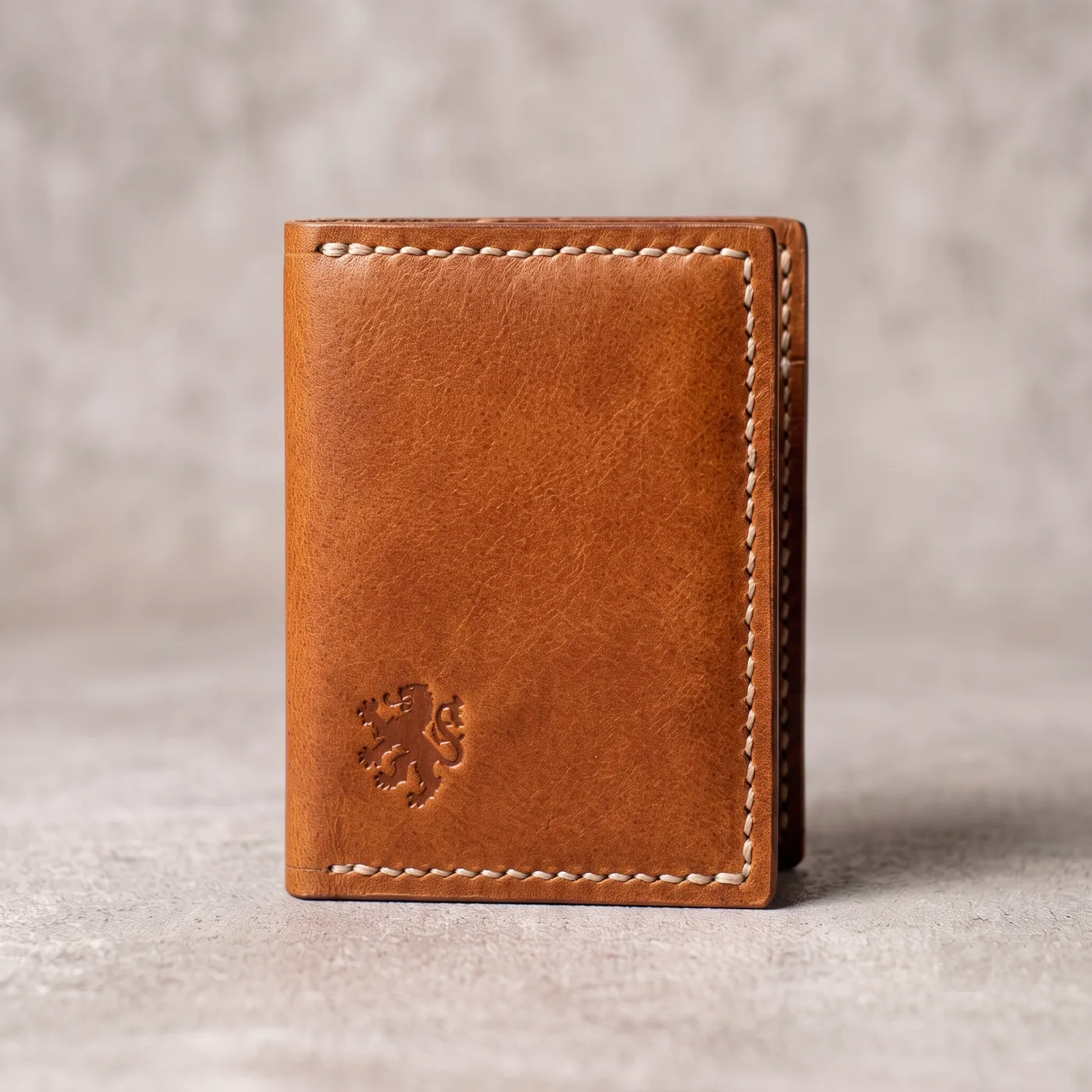
Engraved Leather Wallet for Men
Shop NowFull-grain leather is the only grade thick and sturdy enough to hold deep, permanent custom engravings beautifully.
FAQ
Is genuine leather better than top grain?
No, "genuine leather" is significantly worse than top-grain leather. Genuine leather is made from the loose bottom layers of the hide, heavily processed and glued together. Top-grain is the second-best quality, while full-grain is the absolute best.
How do I know if my wallet is full-grain?
Full-grain leather will often have a rich, earthy smell, and upon close inspection, you may see tiny pores or natural imperfections. It will also change color slightly if you scratch it with your fingernail, whereas top-grain has a plastic-like, perfectly uniform finish.